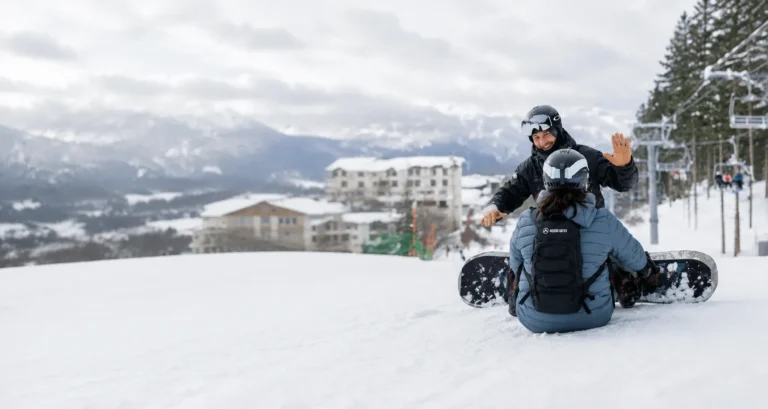
You wake up to deep snow in Niseko, but the wind is howling and the summit lifts are on hold. It happens a lot in mid-winter, and it does not have to ruin your day. Some of Niseko’s best snowboarding happens on stormy, windy days, if you know where to go. Here is how to snowboard Niseko when the upper mountain is closed.
The short version: Head to the lower-mountain trees, choose slopes sheltered from the wind, keep an eye on which lifts are actually running and stay flexible. Trees give you visibility and hold the best snow on storm days.
In this guide
Why Niseko gets so windy
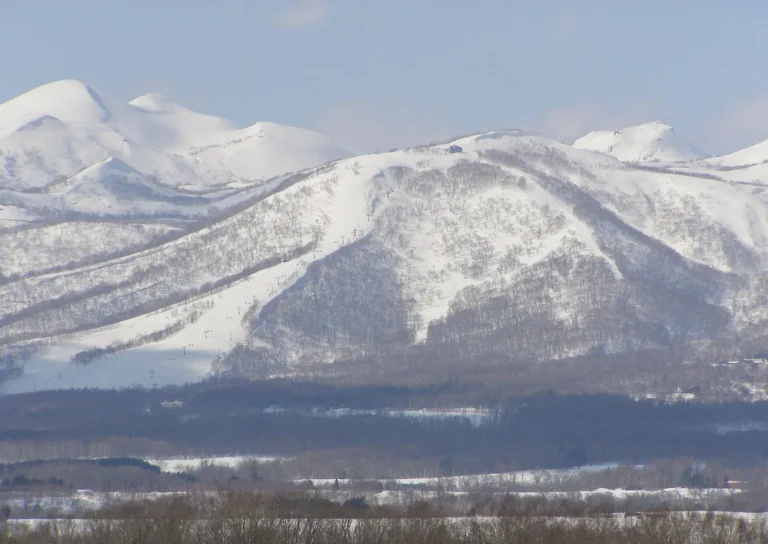
Mt Niseko Annupuri (1,308 m) is a fairly isolated volcano, exposed to the strong winter winds that blow in from the Sea of Japan. The same storms that bring the snow bring the wind. Upper lifts and gondolas often close or start late in strong wind, while the lower lifts keep running.
Wind also moves snow around. It strips exposed ridges and drops snow on sheltered slopes and into the trees. That is why a windy day can still be a great powder day lower down.
Where to snowboard when the upper lifts close
| Conditions | Where to look |
|---|---|
| Big snowfall, strong wind | Lower-mountain trees and slopes sheltered from the wind |
| Big snowfall, light wind | Everywhere is good: get up early and head high if lifts open |
| Wind easing during the day | Watch for upper lifts opening late: first laps up there can be untouched |
| Poor visibility | Trees, which give contrast and depth perception |
| Wind and rain at the base | Higher lower-mountain lifts, where it is still snowing |
Instructor’s note
Check the forecast every morning. Each sector of the mountain faces a different direction, so the wind decides where you go.
If the upper lifts close, Niseko Village gets very flat. The Hirafu gondolas usually hold up well in the wind. Hanazono has a good lower area, with the terrain park reachable from the bottom lifts. At Annupuri you can still reach a green run with a playful little forest that splits into a red. But if only the middle and lower mountain is open, Hirafu gives you the most terrain.
Storm-day snowboarding tips
- Check lift status before you leave. Know which lifts are running and plan around them.
- Go to the trees. Lower-mountain birch forests give you visibility and shelter, and they collect wind-blown snow.
- Look for the sheltered side. Slopes facing away from the wind often hold deeper, softer snow.
- Stay mobile. If one area is scoured or packed, move on. Riders who switch areas find the best snow.
- Use a low-light lens. A yellow, rose or clear lens makes a huge difference in flat light. See our packing guide.
- Avoid long flats. In deep, wind-affected snow, flats are even slower on a board. Keep your speed up.
- Ride with a partner in the trees. Deep snow means tree well risk. Read our tree well safety guide.
- Watch for late openings. When the wind drops in the afternoon, upper lifts can open on fresh, untracked snow.
What wind does to the snow (and how it feels on a board)
- Wind crust: A stiff, sometimes hollow layer on top of softer snow. It can catch your edge, so ride with a relaxed, centred stance.
- Wind-loaded snow: Deeper, denser snow on sheltered slopes and below ridges. Great riding, but heavier than storm snow.
- Scoured slopes: Firm and icy. Avoid them on powder days and look elsewhere.
Heading behind the gates on a windy day? Wind-loaded slopes are where many avalanches happen. Read the daily avalanche report first. Niseko Gates explains how in its Niseko backcountry guide.
Which gates are open right now? Check the Niseko Gates app, where riders post real-time gate status updates from the mountain. Log in to see the latest reports and add your own.
When it is too windy to ride
Some days the wind closes most of the mountain. Use them well: ride a few laps on the lower lifts, take a long lunch, visit an onsen, or take a day trip to Rusutsu, whose tree runs can work well in stormy weather. Read our Rusutsu day trip guide.
Want a local to find the snow?
A local instructor or guide knows exactly where to ride on a windy day and gets you there first.
FAQ
Why are Niseko’s summit lifts often closed?
Strong winter winds. The upper lifts are exposed, so they often close in storms even when the snow is deep. Check live lift status on the Niseko United website.
Where is the best snow in Niseko on a windy day?
Usually in the lower-mountain trees and on slopes sheltered from the wind. Check which lifts are running and head to protected terrain.
Is a windy day in Niseko worth riding?
Yes. Storm days often bring the deepest snow. The best riding is in the trees, and upper lifts sometimes open later in the day on fresh snow.
Sources and official links
Last checked: October 2026. Lift prices, dates and transport change every season, so always confirm with the official sites before you travel.

Snowboard instructors and guides who ride and teach in Niseko every winter. What we write comes from days on the mountain with our students. More about Snowboard Niseko.