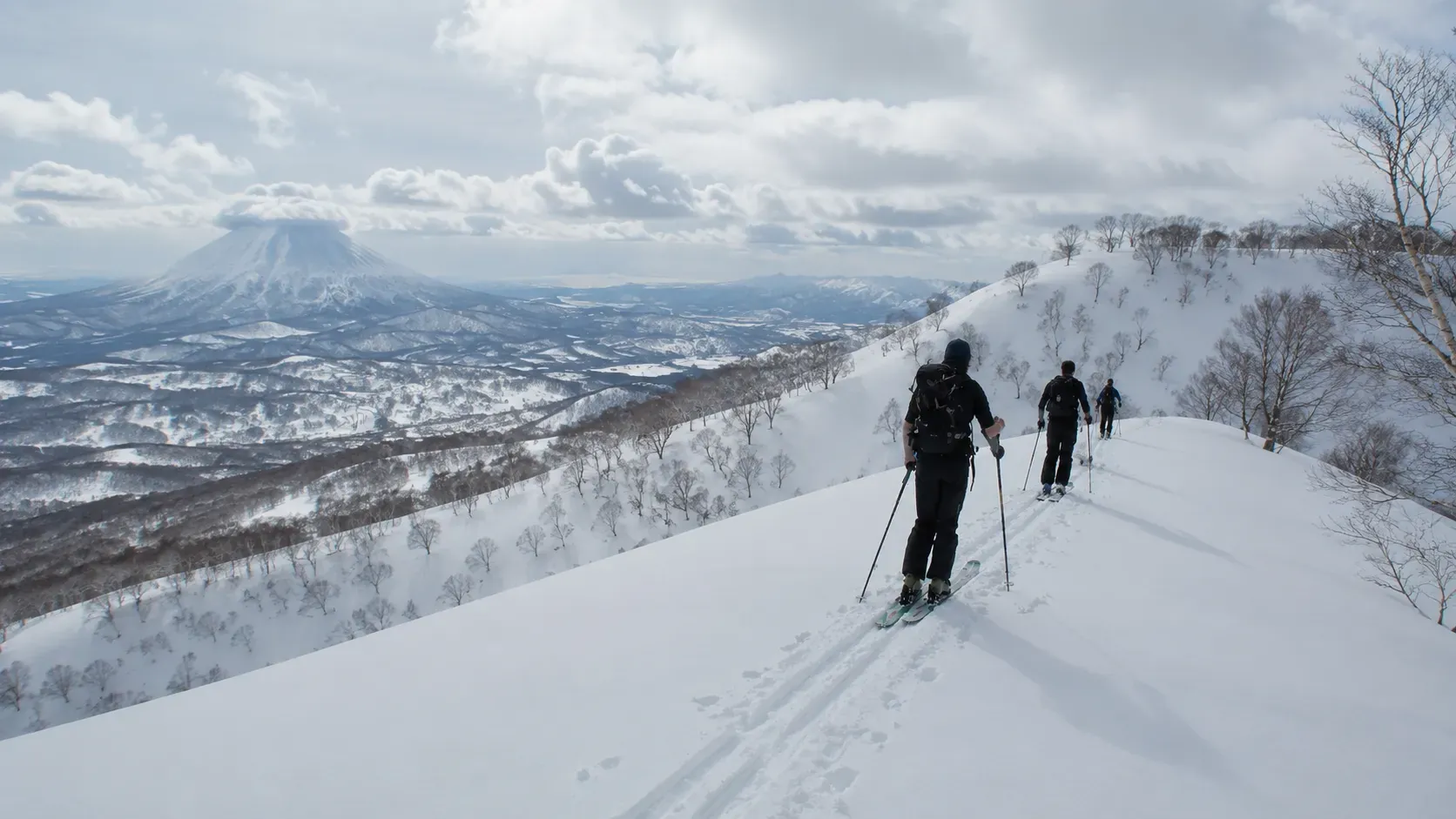

Splitboarding opens up a whole new side of Japan. Instead of being limited to the terrain you can reach from a lift or a gate, you can tour to quiet ridges, untouched forests and volcanoes that see only a handful of riders a day. If you are curious about getting into it, this guide covers the basics.
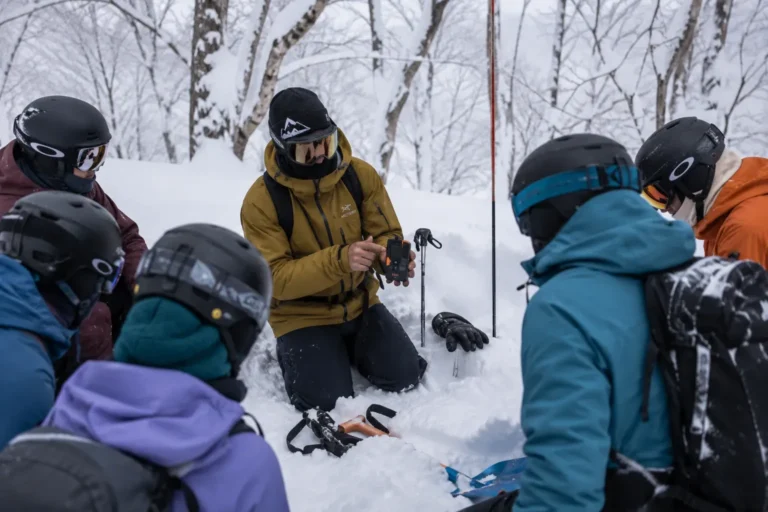
Before anything else: Splitboarding takes you into uncontrolled avalanche terrain. You need avalanche safety training, the right gear and the experience to make good decisions, or a qualified guide who has them.
In this guide
What is splitboarding?
A splitboard is a snowboard that splits down the middle into two skis. With climbing skins on the base, you walk uphill like a ski tourer. At the top, you take the skins off, lock the two halves together and ride down as a normal snowboard.
Why Japan is great for splitboarding
- Snow: Frequent storms and cold temperatures keep the snow light for days.
- Trees: Many touring areas are forested, which gives better visibility on storm days.
- Volcanoes: Hokkaido has several volcanoes with long, even slopes, such as Mt Yotei near Niseko.
- Access: Many tours start from a resort lift or road, so you get a lot of riding for the effort.
Splitboard gear checklist
| Item | Notes |
|---|---|
| Splitboard | Often directional, with a setback stance for powder |
| Climbing skins | Cut to fit your board; keep them dry and warm |
| Splitboard bindings | Switch between touring and riding modes |
| Boots | Stiffer, touring-friendly boots help on the climb |
| Poles | Adjustable or collapsible, to fit in your pack on the way down |
| Ski crampons | For icy traverses and steep climbs |
| Avalanche transceiver, shovel, probe | Non-negotiable, and you must know how to use them |
| Backpack | With room for safety gear, layers, water and food |
| Extra layers, gloves and goggles | Weather changes fast in the mountains |
Where to go splitboarding in Japan
Niseko area
Niseko’s side-country is reachable through the gates, and short tours from the top of the lifts lead to more terrain. Mt Yotei (1,898 m), across the valley, is a classic but serious full-day tour on a volcano with big avalanche terrain. Learn the basics in riding the Niseko gates on a snowboard.
Central Hokkaido
Areas such as Asahidake (2,291 m, Hokkaido’s highest peak, with a ropeway to about 1,600 m), Furano and the Tokachi range offer big touring terrain with cold, dry snow. Many routes are remote, so a guide is strongly recommended.
Honshu
The Northern Japan Alps around Hakuba have big alpine terrain for experienced tourers, along with tree touring in the lower forests.
How to get started
- Ride powder confidently first. Touring is hard work, and you want to enjoy the descent. Start with how to snowboard in powder.
- Take an avalanche course. Learn how avalanches form, how to read terrain and how to do a companion rescue.
- Rent before you buy. Many shops in Niseko and Hakuba rent splitboards and safety gear.
- Go with a guide. Your first tours should be with a qualified guide who knows the area and the snowpack.
- Practise transitions. Switching from tour to ride mode quickly makes a big difference on cold days.
How fit do you need to be?
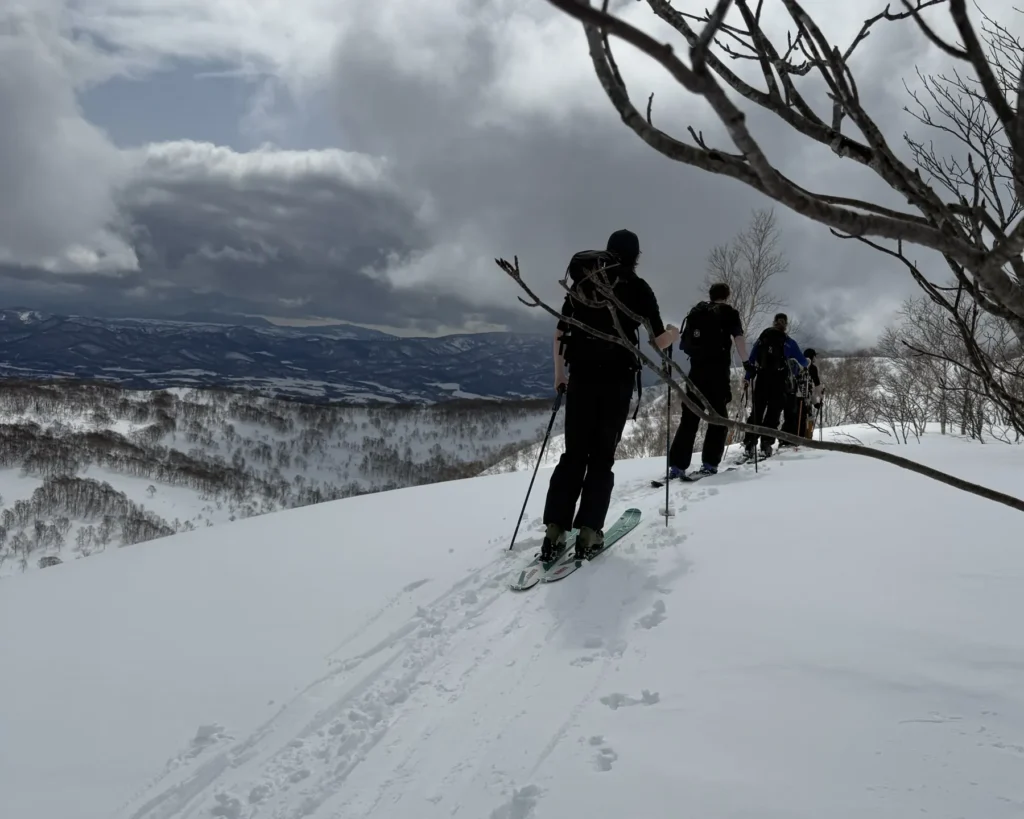
You do not need to be an athlete, but touring uphill in deep snow is tiring. A typical introductory tour climbs for 1 to 2 hours. Being comfortable hiking for a few hours with a pack makes your first tours much more enjoyable.
Try your first tour in Niseko
Join a guided backcountry tour with local guides who know the terrain and the snowpack, with safety gear included.
FAQ
Can beginners go splitboarding?
Beginner snowboarders should first get comfortable riding powder and trees. Once you are, a guided introductory tour is a great first step.
Can I rent a splitboard in Japan?
Yes. Shops in backcountry hubs such as Niseko and Hakuba rent splitboards, skins and avalanche gear. Book ahead in peak season.
Do I need a guide to splitboard in Japan?
If you are not trained in avalanche safety or do not know the area, yes. A guide chooses safe terrain for the day’s conditions and helps you learn.
Where can I check avalanche conditions?
In Niseko, read the daily Niseko Avalanche Information bulletin. The Japan Avalanche Network publishes forecasts for several regions, including Niseko.
Sources and official links
Last checked: October 2026. Lift prices, dates and transport change every season, so always confirm with the official sites before you travel.

Snowboard instructors and guides who ride and teach in Niseko every winter. What we write comes from days on the mountain with our students. More about Snowboard Niseko.