
Packing for a snowboard trip to Japan is different from packing for most resorts. It is cold, it snows a lot, you will spend a lot of time in the trees, and you may end up riding deeper snow than you have ever seen. Here is what to bring, what you can rent and what is worth investing in.
Some links on this site may be affiliate links. If you buy through them, we may earn a small commission at no extra cost to you. Read our affiliate disclosure.
In this guide
The quick checklist
- Snowboard (or plan to rent a powder board)
- Boots and bindings
- Waterproof jacket and pants, ideally with a powder skirt
- Base layers and a mid layer
- Waterproof gloves or mittens, plus a spare pair
- Goggles with a low-light lens
- Helmet
- Neck warmer or face mask
- Backpack
- Avalanche gear if you plan to ride behind the gates
Snowboard: what works best in Japan
You can ride anything in Japan, but some boards make deep days much easier.
- Directional shapes with a longer nose and shorter tail float better in deep snow.
- Setback stance lets the nose rise without you leaning back.
- Taper (a tail narrower than the nose) helps the tail sink and the nose float.
- A bit more length or width than your groomer board adds float.
If you only own an all-mountain twin, that is fine. Set your bindings as far back as the inserts allow. If you are thinking about buying a powder-specific board, Japan is where you will feel the difference. Learn how to use it in our guide to snowboarding in powder.
Boots and bindings
Bring your own boots if you can. Well-fitted boots matter more than any other piece of gear, and rental boots are the most common cause of a miserable trip. Bindings are less critical, but make sure they fit your boots and that you know how to adjust the stance angles and setback.
Outerwear and layers
Japan in mid-winter is cold, and Hokkaido can drop well below -10°C up high, especially with wind. The snow is dry, so you do not need the most expensive waterproof shell, but you do need warmth and good snow protection.
| Layer | What to look for |
|---|---|
| Base layer | Merino or synthetic, never cotton |
| Mid layer | Light fleece or insulated jacket you can add or remove |
| Jacket | Waterproof, breathable, with a hood that fits over a helmet and a powder skirt |
| Pants or bib | Bibs keep snow out of your back when you fall in deep powder |
| Socks | One pair of thin to mid-weight ski socks, plus spares |
Gloves, goggles and face protection
- Mittens or warm gloves: Hands get cold on long, windy chairlifts. Many riders bring two pairs and swap them at lunch.
- Goggles with a low-light lens: Japan’s storm days are grey and flat. A yellow, rose or clear lens makes a big difference. A spare lens or second pair helps when one fogs up.
- Neck warmer or face mask: Essential on windy lifts and on cold, snowy days.
- Helmet: Strongly recommended everywhere, and required behind the Niseko gates under the Niseko Rules.
Avalanche and backcountry gear
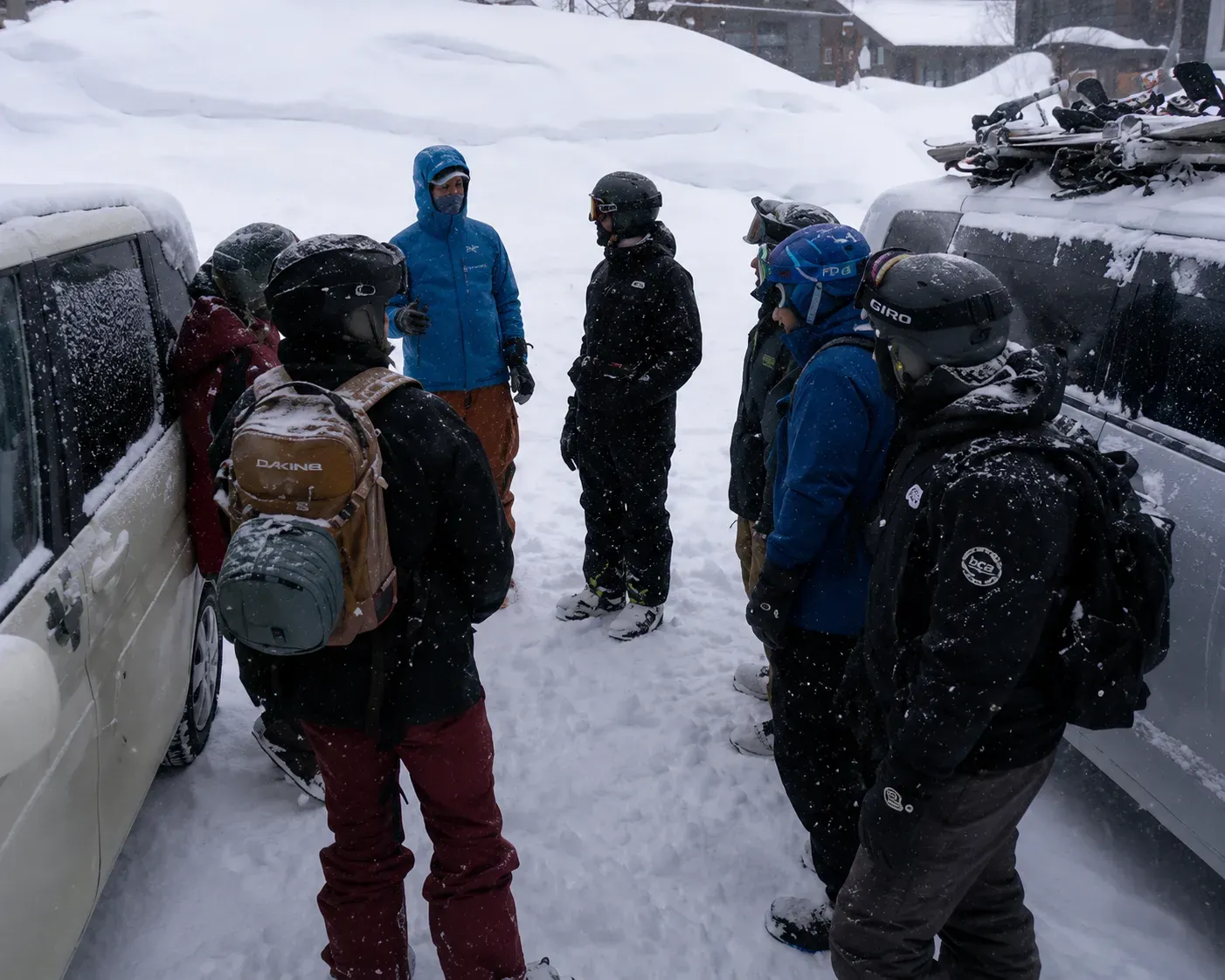
If you plan to ride behind the Niseko gates, the Niseko Rules require a helmet and an avalanche transceiver, and a shovel and probe are very highly recommended. The same kit is essential anywhere outside a resort, along with the training to use it. A backpack designed for snow sports carries it properly. For what goes inside it on the day, see Niseko Gates’ guide on how to pack your backpack for a freeride day.
Read riding the Niseko gates on a snowboard and our guide to tree well safety before you go.
Can you rent avalanche gear in Japan? Yes. Rental and guiding shops in Niseko, Hakuba and other backcountry hubs rent beacon, shovel and probe sets, and guided tours usually include them.
What to rent instead of bringing
Renting is a good option if you are travelling light or want to try a powder board. Rental shops in resort towns such as Niseko and Hakuba have good quality boards, including powder shapes. Book ahead in peak season. Boots are the one item worth bringing from home if you can.
Instructor’s note
The gear mistakes we see most: boards that are too short, badly set-up bindings, loose boots, pants tucked inside the boots and double socks. Step-on bindings are not a good idea for complete beginners, and neither are top-of-the-range boards or powder boards when you are learning from zero: it is not easy to drive a Ferrari.
For rentals, Rhythm in Hirafu has some of the best gear for short rentals. For longer stays (around 15 days), Burton’s online rentals in Japan have the best prices and deliver to your hotel.
Travel extras
- Board bag with wheels: Makes airport transfers much easier.
- Luggage forwarding: Japan’s takkyubin services can send your board bag between the airport and your hotel.
- Cash and an IC card: Card payment is common in resort towns, but cash is still useful for small restaurants, buses, lockers and onsen.
- Phone power bank: Batteries drain fast in the cold.
- Small towel: Handy for onsen visits after riding.
- Travel adapter: Japan uses two-pin type A sockets (type B in some places) at 100 volts.
FAQ
Should I bring my own snowboard to Japan?
If you have a board you love, bring it. Otherwise, renting a powder board in Japan is easy and lets you try a shape built for deep snow.
Do I need a powder board for Japan?
You do not need one, but it makes deep days much easier and more fun. At minimum, set your bindings back. See powder snowboard shapes explained.
How cold is it snowboarding in Japan?
In mid-winter Hokkaido, the January average in Niseko town is around −6°C, and it is much colder on the upper mountain, especially with wind. Dress in layers.
Do I need a helmet in Niseko?
On the groomers it is strongly recommended. Behind the Niseko gates, a helmet and avalanche transceiver are required by the Niseko Rules.
Sources and official links
Last checked: October 2026. Lift prices, dates and transport change every season, so always confirm with the official sites before you travel.

Snowboard instructors and guides who ride and teach in Niseko every winter. What we write comes from days on the mountain with our students. More about Snowboard Niseko.