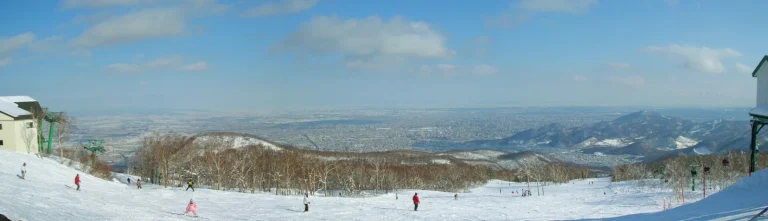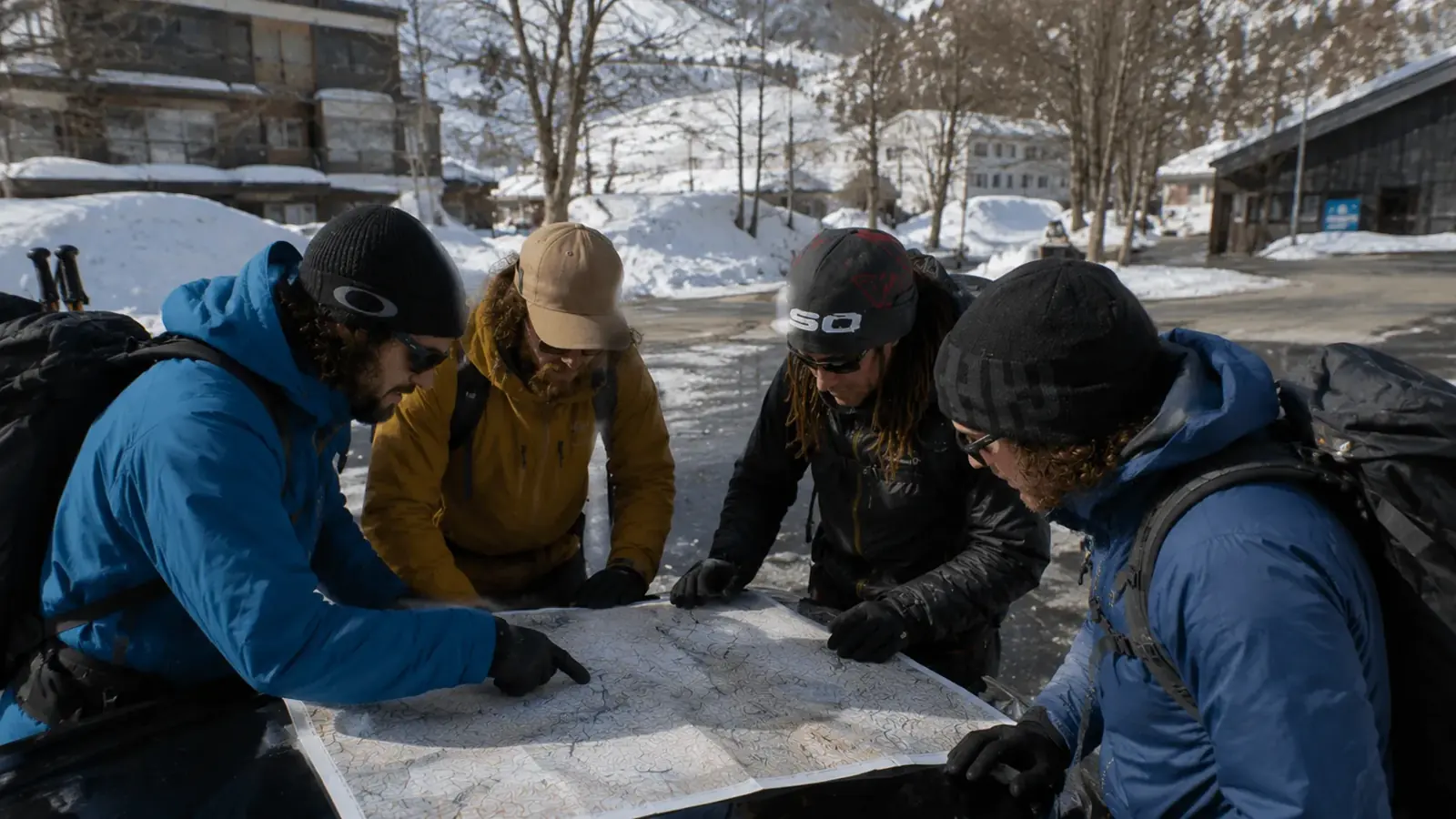

Planning your first snowboard trip to Japan? It is one of the best snow trips in the world, and one of the easiest once you know how things work. This guide covers where to go, when to go, how to get there, lift passes, rentals, money, etiquette and staying safe.
First-timer formula: Fly into New Chitose (Sapporo), ride Niseko for a week in January or February, book a lesson or guide for your first day and leave room for a day trip to Rusutsu or Kiroro.
In this guide
1. Choose your region
For a first trip, most snowboarders choose between Hokkaido (Niseko, Rusutsu, Kiroro, Furano) and Nagano (Hakuba, Nozawa Onsen, Shiga Kogen). Hokkaido has the lightest, most reliable powder. Nagano has bigger alpine terrain and is closer to Tokyo. See our full comparison of the best snowboard resorts in Japan.
2. Pick your dates
January is the deepest month, with late December and February close behind. Book early if you are travelling over Christmas, New Year or the Lunar New Year. More detail in the best time to snowboard in Japan.
3. Getting there
- Hokkaido: Fly into New Chitose Airport (CTS). Niseko is about 110 km away: about 2.5 hours by the White Liner or Hokkaido Resort Liner bus, or about 2 h 45 min by train to Kutchan via Otaru. Rusutsu and Kiroro are closer.
- Nagano: Fly into Tokyo (Narita or Haneda), take the Hokuriku Shinkansen to Nagano (about 80–90 minutes) and a bus to Hakuba or Nozawa Onsen. Direct buses also run from Shinjuku (about 5 hours to Hakuba).
Airport buses to the big resorts handle board bags easily. Book ahead in peak season. See New Chitose Airport to Niseko for every option.
Travel light with luggage forwarding. Japan’s takkyubin luggage services can send your board bag between the airport and your hotel, so you do not have to carry it on trains.
4. Lift passes
Most resorts sell day and multi-day passes, often cheaper online. In Niseko, the All Mountain Pass covers all four Niseko United resorts. For 2026-27, a 1-day adult pass costs ¥8,800 in the early and spring seasons, ¥12,600 in the regular season and ¥13,500 in peak season (24 December to 28 February). Many passes are IC cards with a small refundable deposit (¥1,000 in Niseko). Hakuba sells a valley-wide pass covering its ten resorts.
5. Rentals and lessons
Rental shops in the big resort towns stock good boards, including powder shapes, and staff often speak English. Book in advance for peak weeks. Bring your own boots if you can; they make the biggest difference to comfort.
Even experienced riders benefit from a lesson or guided day at the start of a Japan trip. Powder, trees and the local rules are different from what most people are used to.
New to Japan powder?
Start your trip with a private lesson or guided day in Niseko and spend the rest of the week riding with confidence.
6. Money and costs
Japan is more card-friendly than it used to be, but cash is still useful for small restaurants, buses, lockers and onsen. Convenience stores (konbini) have ATMs that accept foreign cards. Tipping is not expected in Japan and can cause confusion.
7. Etiquette on and off the mountain
- Queue politely in lift lines and follow staff instructions.
- Respect the ropes. In Niseko you may only leave the resort through official gates, and rule breakers can lose their lift pass.
- Take your rubbish with you. Public bins can be hard to find.
- Onsen rules: Wash before you get in, no swimwear, keep towels out of the water. Some onsen restrict tattoos, so check first.
- Shoes off inside homes, many guesthouses and some restaurants.
- Keep it quiet on public transport and in residential areas.
More detail in our guide to Japan ski resort etiquette.
8. Stay safe
Japan’s deep snow is amazing, and it comes with risks that many visitors underestimate.
- Ride with a partner and stay in sight, especially in trees. Read our tree well safety guide.
- Never ride out-of-bounds without the right gear, training and, ideally, a guide. In Niseko, read riding the Niseko gates on a snowboard.
- Get travel insurance that covers snowboarding, and check whether it covers off-piste riding.
- Dress for real cold. Our packing guide has the full list.
9. Sample one-week itinerary (Niseko)
| Day | Plan |
|---|---|
| Day 1 | Arrive at New Chitose, transfer to Niseko, pick up rentals |
| Day 2 | Lesson or guided day to learn the mountain |
| Day 3–4 | Ride the four Niseko United resorts, focus on trees on storm days |
| Day 5 | Day trip to Rusutsu or a guided gate tour if conditions allow |
| Day 6 | Your favourite runs, onsen in the afternoon |
| Day 7 | Morning laps, transfer back to the airport |
FAQ
Is Japan good for beginner snowboarders?
Yes. Big resorts have plenty of beginner terrain, good rentals and English-speaking instructors, and soft snow makes falling less painful.
Do I need to speak Japanese to snowboard in Japan?
No, especially in Niseko and Hakuba, where English is widely spoken. A few basic phrases are appreciated.
How much is a lift pass in Niseko?
For 2026-27, a 1-day adult Niseko United All Mountain Pass costs ¥8,800 to ¥13,500 depending on the season. Multi-day passes work out cheaper per day.
Can I drive to the resorts?
Yes, with your licence plus an International Driving Permit under the 1949 Geneva Convention, or an official JAF translation for some countries. Winter driving is challenging, so many visitors use buses and transfers.
Sources and official links
- Niseko United: lift tickets 2026-27
- Niseko Tourism: getting here
- Hakuba Valley (official)
- Japan National Tourism Organization
Last checked: October 2026. Lift prices, dates and transport change every season, so always confirm with the official sites before you travel.

Snowboard instructors and guides who ride and teach in Niseko every winter. What we write comes from days on the mountain with our students. More about Snowboard Niseko.