Japan’s ski resorts are friendly, safe and very well run, and a big part of that comes down to shared manners. Most of the rules are common sense, but some are uniquely Japanese and easy to miss as a visitor. Here is the etiquette every snowboarder should know before their first Japan trip, on the mountain and off it.
The basics: Respect the ropes and the lift staff, queue politely, take your rubbish with you, follow onsen rules and keep your voice down in public spaces.
In this guide
On the mountain
- Respect the boundary ropes. Ducking ropes is taken seriously: under the Niseko Rules your lift pass can be confiscated, and backcountry rescue is charged from ¥100,000. In Niseko, you can only leave the resort through official gates. See riding the Niseko gates on a snowboard.
- Queue in order. Lift lines are orderly. Do not push in, and merge one by one.
- Follow lift staff. They may ask you to remove your backpack, hold your board a certain way or wait for the next chair.
- Do not stop in the middle of a run. Stop at the side, where people above can see you.
- Give way to people below you. The rider downhill has priority.
- Keep closed runs closed. Courses can close for grooming, racing or safety. Do not enter them.
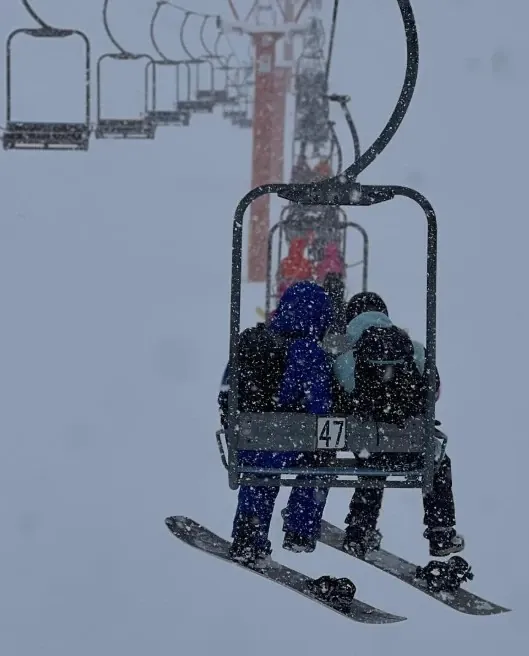
In the gondola and on the lifts
- Carry your board as instructed, often in a rack outside the gondola.
- Keep your conversation at a reasonable volume.
- Do not eat in gondola cabins unless it is clearly allowed.
In the lodge and restaurants
- Do not save tables for long periods at busy times.
- Clean up after yourself. Many restaurants have trays and return areas.
- Take your rubbish home if there is no bin. Public bins are rarer in Japan than in many countries.
- No tipping. Tipping is not part of Japanese culture and can cause confusion.
Onsen etiquette
An onsen (hot spring) after riding is one of the best parts of a Japan trip. The rules:
- Wash thoroughly before you get in, at the seated shower stations.
- No swimwear. Onsen are used without clothing, separated by gender.
- Keep your small towel out of the water. Many people fold it on their head.
- Tie up long hair so it does not touch the water.
- Check tattoo rules. Some onsen do not allow visible tattoos. Others allow them, or let you cover small ones with a patch.
- Keep it quiet and do not take photos.
Riding Niseko? See our guide to the best onsen in Niseko after snowboarding, with tattoo-friendly and private options.
In town and accommodation
- Shoes off at the entrance of homes, guesthouses and some restaurants. Look for slippers or a raised floor.
- Keep noise down at night, especially in residential areas and shared accommodation.
- Respect local residents. In Niseko and Hakuba, many people live and work there year round.
Instructor’s note
Japanese people are generally quiet, unless they are in an izakaya. There are no rubbish bins on the street: keep your rubbish in your pocket or use the bins at convenience stores.
Queues are usually more orderly than anywhere else in the world, although less so at the most touristy spots. You will often see early arrivals leave their board in the lift line to hold their place while they wait in a café. Most locals speak little English, so patience and respect go a long way.
Useful phrases
| Phrase | Meaning |
|---|---|
| Arigatou gozaimasu | Thank you very much |
| Sumimasen | Excuse me / sorry |
| Onegaishimasu | Please (when asking for something) |
| Daijoubu desu ka? | Are you OK? |
FAQ
Can you tip in Japan?
Tipping is not expected in Japan, including at ski resorts, restaurants and taxis. Good service is simply part of the culture.
Can I go to an onsen with tattoos?
It depends. Some onsen ban tattoos, some allow them, and some allow small covered tattoos. Check before you go.
What happens if you duck a rope in Japan?
It breaks resort rules. In Niseko your lift pass can be confiscated, and if you need rescuing in the backcountry you will be charged at least ¥100,000.
Sources and official links
Last checked: October 2026. Lift prices, dates and transport change every season, so always confirm with the official sites before you travel.

Snowboard instructors and guides who ride and teach in Niseko every winter. What we write comes from days on the mountain with our students. More about Snowboard Niseko.
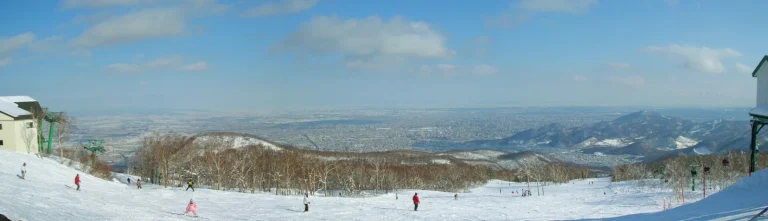
Cover photo: Markmark28, CC BY-SA 3.0, via Wikimedia Commons