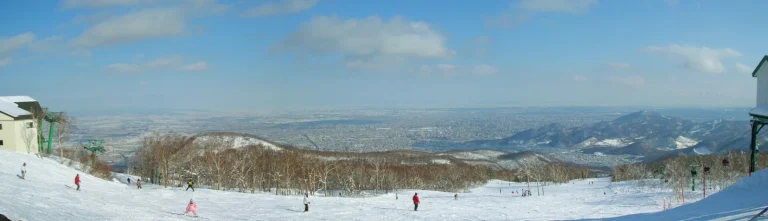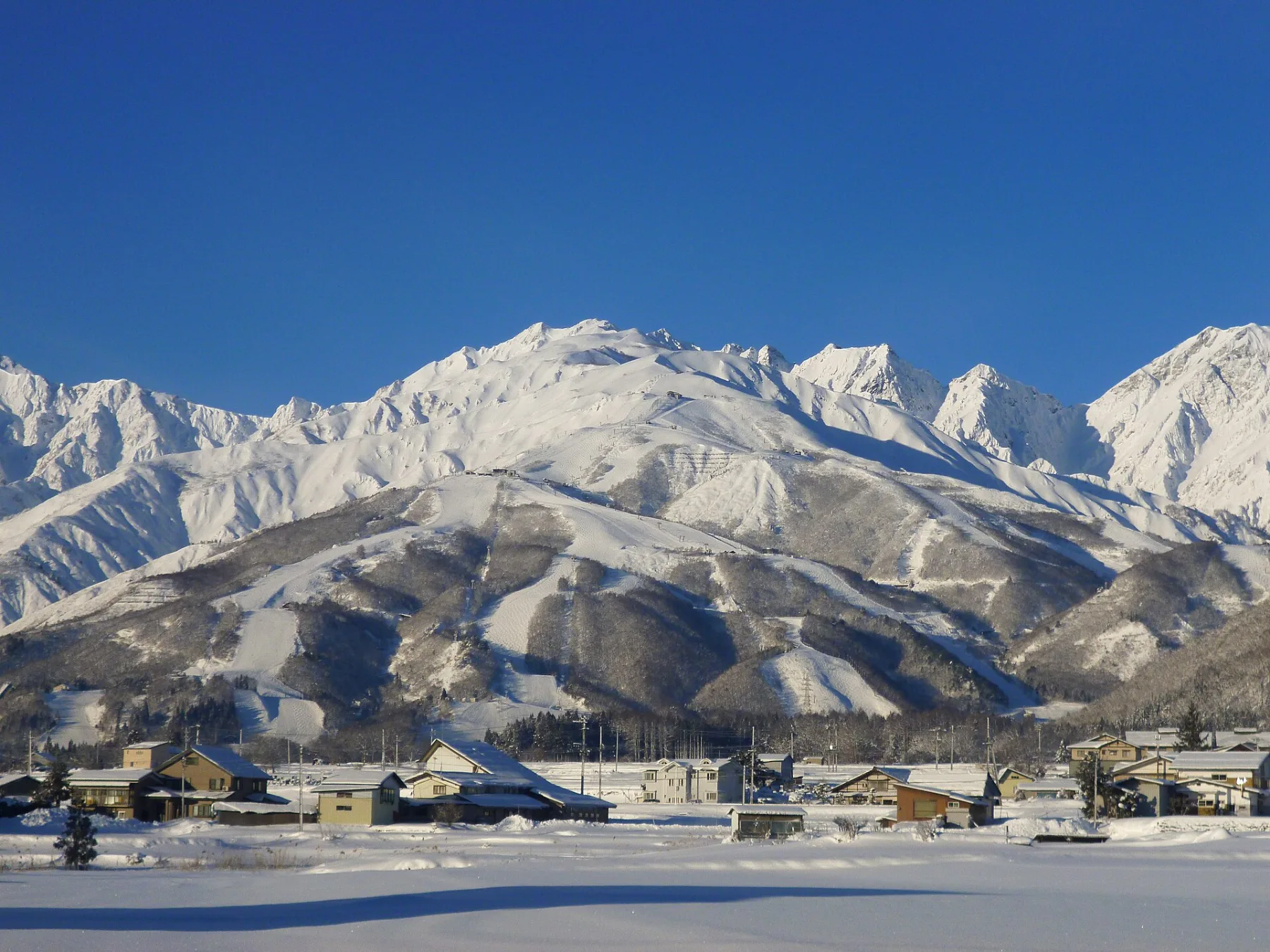

Hakuba is Japan’s biggest alternative to Niseko and the best known snowboard destination on Honshu, the main island. Set in the Northern Japan Alps in Nagano, it has steep alpine terrain, great tree riding and ten resorts along a single valley. This guide covers what snowboarders need to know.
Why Hakuba: Bigger, steeper mountains than Hokkaido, huge variety across many resorts, and an easy trip from Tokyo by bullet train and bus.
In this guide
Hakuba at a glance
| What | Details |
|---|---|
| Location | Hakuba Village, Omachi and Otari, Nagano Prefecture, at the foot of the Northern Japan Alps |
| Resorts | 10 resorts along about 30 km, covered by the Hakuba Valley pass |
| Biggest mountain | Happo-one: top 1,831 m, about 1,070 m of vertical |
| Getting there | Hokuriku Shinkansen Tokyo–Nagano (about 80–90 min), then a bus to Hakuba (about 1–1.5 h); or a direct bus from Shinjuku (about 5 h) |
| Olympic history | 1998 Nagano Winter Olympics: alpine speed events at Happo-one, plus ski jumping and Nordic events in Hakuba |
| Best for | Alpine terrain, variety, advanced riders, combining with Tokyo |
The main Hakuba resorts for snowboarders
| Resort | Top elevation | Vertical | Why ride it |
|---|---|---|---|
| Happo-one | 1,831 m | ~1,070 m | Big, long runs and views of the Alps |
| Hakuba47 / Goryu | 1,614 m / 1,676 m | ~790–930 m | Linked resorts with groomers, trees and parks |
| Tsugaike Kogen | 1,704 m | ~900 m | Wide open slopes and the “Tsuga Pow” backcountry area |
| Cortina / Norikura | 1,402 m / 1,300 m | ~530–600 m | Deep snow and famous tree riding |
| Iwatake | 1,289 m | ~540 m | Ungroomed courses and big views |
Happo-one
The biggest and best known resort in Hakuba, with long runs, big vertical and views across the Alps. Upper slopes can be exposed to wind. On good days from early January to early March, patrol may open the gated ungroomed “Omusubi” area.
Hakuba47 and Goryu
Two linked resorts with a good mix of groomers, trees and terrain parks, long popular with snowboarders.
Cortina and Norikura
At the northern end of the valley, Cortina is famous for tree riding and deep snow. Cold air crossing the Alps from the Sea of Japan often drops more snow here than at the rest of the valley. Norikura next door adds more terrain.
Tsugaike Kogen and Iwatake
Tsugaike Kogen has wide open slopes and the “Tsuga Pow” backcountry zone, which requires a safety briefing and an armband. Iwatake is a smaller mountain with great views and several ungroomed courses.
Hakuba vs Niseko
Niseko has more consistent light powder and simpler logistics. Hakuba has bigger, steeper terrain and more variety. Read our full Niseko vs Hakuba comparison.
When to go
Late December to February is the best time for powder in Hakuba. Because it sits further south than Hokkaido, warm spells are more likely, so January is usually the safest bet. March can bring spring snow and sunny days, and higher resorts stay open into April.
Getting around the valley
Hakuba is spread out, and each resort is its own mountain. Shuttle buses link the main villages and resorts, and many hotels run their own shuttles. A car makes it easy to chase snow, but parking and winter driving need some planning.
Backcountry in Hakuba
Hakuba’s alpine terrain is serious. Off-piste rules differ by resort: some open gated areas only after patrol checks and others require a briefing and an armband. Much of the surrounding backcountry is big avalanche terrain. Beyond the resort boundaries, go with a qualified local guide, carry full avalanche gear and check the local avalanche bulletins. Our splitboarding guide covers the gear and training you need.
FAQ
Is Hakuba good for snowboarding?
Yes. Hakuba has some of the best alpine terrain in Japan, plenty of trees and terrain parks, and snowboarders are welcome at all the main resorts.
How do I get from Tokyo to Hakuba?
Take the Hokuriku Shinkansen from Tokyo to Nagano (about 80–90 minutes), then an express bus to Hakuba. Direct buses from Shinjuku take about 5 hours.
How many ski resorts are in Hakuba Valley?
Ten, spread along about 30 km and covered by the Hakuba Valley pass.
Which Hakuba resort is best for powder?
Cortina is famous for deep snow and trees, but on a big storm day almost every resort in the valley has great riding.
Sources and official links
- Hakuba Valley (official)
- STEEP: Hakuba Valley resort data
- Tokyo to Hakuba transport guide (Tokyo Cheapo)
Last checked: October 2026. Lift prices, dates and transport change every season, so always confirm with the official sites before you travel.

Snowboard instructors and guides who ride and teach in Niseko every winter. What we write comes from days on the mountain with our students. More about Snowboard Niseko.
Cover photo: Ski Mania, public domain, via Wikimedia Commons