
Most snowboarders set up their stance once and never touch it again. But the stance that works on groomers is rarely the best one for deep snow. A few minutes with a screwdriver can make Japan’s powder much easier to ride. Here is how to set up your snowboard stance for powder.
Quick setup for powder: Move your bindings as far back as the inserts allow, use slightly more forward-facing angles, keep your usual stance width and make sure your highbacks have a little forward lean.
In this guide
Setback: the most important change
Setback means moving both bindings back toward the tail, so the middle of your stance sits behind the middle of the board. This gives you more nose in front of you, and the nose rises naturally in deep snow.
- Why it works: You do not have to lean back to keep the nose up, so your back leg stays fresh.
- How much: As much as your inserts allow. Many boards have a “reference stance” with built-in setback and extra inserts behind it.
- Trade-off: Riding switch becomes harder. On a powder day, that is a trade most riders are happy to make.
Instructor’s note
If you only change one thing for a powder trip, change setback, not angles. Angles take a few runs to get used to; setback works immediately.
Binding angles
Angles are measured in degrees from straight across the board. Positive angles point toward the nose.
| Setup | Example angles | Good for |
|---|---|---|
| Duck | +15 / -15 | Park, switch riding, all-mountain |
| Mild duck | +18 / -6 | All-mountain with a forward bias |
| Forward | +21 / +6 | Powder, directional riding, carving |
For powder, a more forward stance helps you face the direction you are riding and steer with your back foot. Change one thing at a time, and adjust in small steps of 3 to 6 degrees.
Stance width
Keep the width you are comfortable with. A stance that is too wide makes it harder to move up and down, and too narrow reduces stability. As a starting point, many riders use roughly shoulder width.
Highback forward lean
Forward lean tilts your highback slightly forward, which helps you engage your heel edge and keeps you in an athletic, knees-bent position. A little forward lean helps in powder; too much makes your legs tired.
Strap and boot check
- Ankle straps: Snug, not crushing. Your heel should not lift inside the binding.
- Toe straps: Over or in front of the toe, as the binding is designed.
- Boots: Tighten them properly in the morning and re-check after the first runs, as boots loosen as they warm up.
Tools to carry
Bring a small snowboard tool or screwdriver so you can adjust your stance on the hill. Many lift stations and rental shops in Japan will also help if you ask.
Back on the groomers?
If you go back to resort riding, move your bindings back to your usual stance. Or, if you ride Japan a lot, consider a dedicated powder board. See powder snowboard shapes explained and our guide on how to snowboard in powder.
Get your setup checked by a pro
A local instructor will check your stance and technique on day one and help you get the most from Japan’s deep snow.
FAQ
Should I set my bindings back for powder?
Yes. Setting your bindings back is the easiest way to improve float without leaning back.
What binding angles are best for powder?
A more forward stance, such as +21 / +6, helps many riders in powder, but the best angles are the ones that feel natural to you.
Can I change my stance on the mountain?
Yes, with a snowboard tool or screwdriver. Make small changes and test them on an easy slope first.
Written and reviewed by snowboard instructors who teach powder and tree riding in Niseko every winter. Last reviewed: October 2026.

Snowboard instructors and guides who ride and teach in Niseko every winter. What we write comes from days on the mountain with our students. More about Snowboard Niseko.
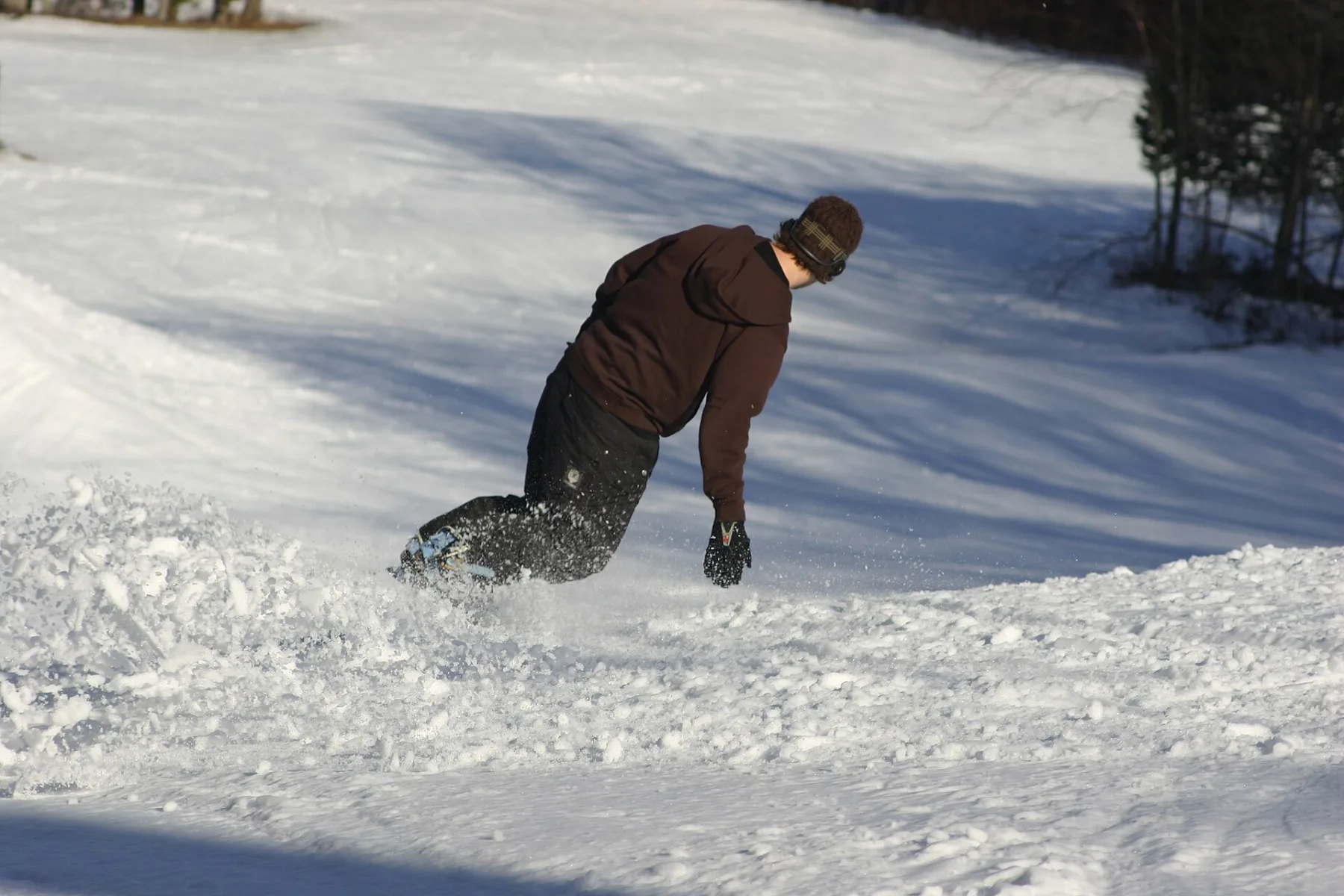
Cover photo: grendelkhan, CC BY-SA 4.0, via Wikimedia Commons.