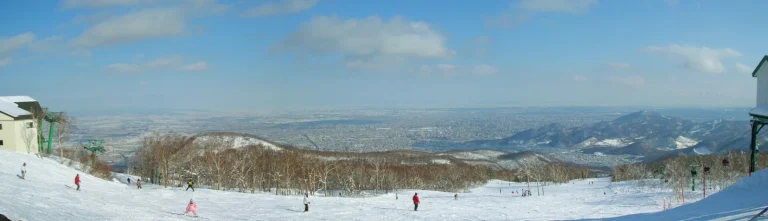
Furano sits in the middle of Hokkaido, far from the coast, and that makes all the difference. The air is colder and drier than in Niseko, and the snow that falls here is often some of the lightest in Japan. Add a lively town with great food and far fewer foreign crowds, and it is easy to see why so many riders add Furano to a Hokkaido trip.
Why Furano: Very dry snow, long cruisy runs, a real Japanese town at the bottom and an easy combination with Niseko or the central Hokkaido resorts.
In this guide
Furano at a glance
| What | Details |
|---|---|
| Location | Central Hokkaido, about an hour by road from Asahikawa Airport |
| Resort | Furano Ski Resort (Prince Hotels): Kitanomine Zone and Furano Zone, one pass |
| Top / base / vertical | 1,209 m / about 245 m / about 960 m |
| Lifts | 11, including the Furano Ropeway and Kitanomine Gondola |
| Season | Furano Zone from late November to early May; Kitanomine Zone from mid-December to late March |
| Side-country | Gates since the 2015-16 season; register with ski patrol before you go |
| Getting there | Bus from Asahikawa Airport about 70 minutes; direct Hokkaido Resort Liner from New Chitose (book ahead) |
The snow
Because Furano sits inland, storms arrive with less moisture and temperatures stay lower. The result is very light, cold snow. Furano gets less snow than Niseko or Rusutsu (roughly 8–9 m a season by most estimates), and more sunny days, but the quality is excellent and it often stays soft for longer.
The mountain
Furano Ski Resort is split into two connected zones on one pass. The Kitanomine Zone sits above the main restaurant and bar area of Kitanomine, served by the Kitanomine Gondola. The Furano Zone is next to the New Furano Prince Hotel and served by the Furano Ropeway, with some of the longest runs. Furano has hosted FIS Alpine Ski World Cup races and, more recently, Snowboard World Cup events.
Snowboarders will find wide groomers for carving, trees between the zones and plenty of space on weekdays. Side-country gates opened in the 2015-16 season: you must register with ski patrol before leaving the groomed runs, and going beyond the gates requires avalanche equipment and, ideally, a guide.
Off the slopes
Furano is a working Japanese town, not a resort village. Expect izakaya, ramen shops, local curry restaurants and onsen. It is quieter than Niseko’s Hirafu, with fewer bars and a more local feel.
Nearby resorts and day trips
- Tomamu: A large resort complex south of Furano, known for cold, dry snow.
- Kamui Ski Links: A small, local resort near Asahikawa, loved for its powder and trees.
- Asahidake and Tokachidake: Volcano backcountry in the Daisetsuzan mountains, for experienced riders with a guide.
See more options in our Hokkaido snowboarding guide.
Furano or Niseko?
Niseko has more snow, more terrain variety, legal side-country through the gates and the most English-friendly services. Furano has drier snow, a more Japanese feel and fewer crowds. Many riders do a week in Niseko and add a few days in Furano.
FAQ
Is Furano good for snowboarding?
Yes. Furano has very light, dry snow, long runs and trees, and is a great choice for intermediate and advanced snowboarders.
How do I get to Furano?
Fly into Asahikawa Airport, about 70 minutes by bus, or New Chitose Airport near Sapporo, about 2.5 hours by road with direct winter buses that need booking.
Can you ride off-piste in Furano?
Yes, through side-country gates, but you must register with ski patrol first and carry avalanche gear.
Is Furano better than Niseko?
It is different. Niseko gets more snow and has more terrain and services. Furano has drier snow, more sunshine, fewer crowds and a more local town.
Sources and official links
Last checked: October 2026. Lift prices, dates and transport change every season, so always confirm with the official sites before you travel.

Snowboard instructors and guides who ride and teach in Niseko every winter. What we write comes from days on the mountain with our students. More about Snowboard Niseko.
Cover photo: wakimasa, public domain, via Wikimedia Commons